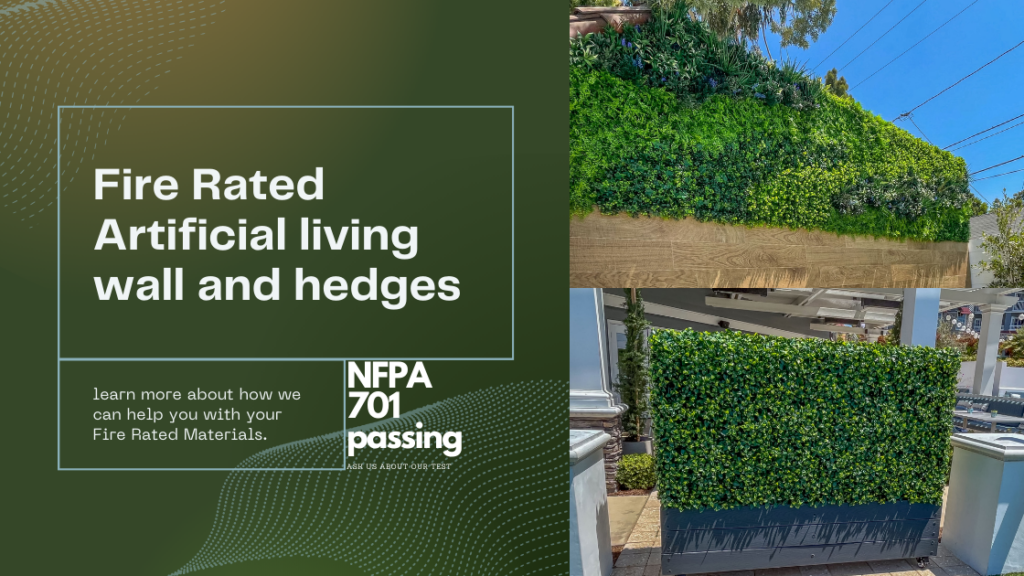
Why Fire Safety Matters for Artificial Landscape Materials
Critical Safety Notice: In fire-prone areas and commercial buildings, using non-compliant artificial landscape materials can result in failed inspections, insurance claims denial, and serious liability issues. This guide ensures your projects meet all required safety standards.
As wildfires become increasingly common and building codes become more stringent, the fire safety of artificial landscape materials has never been more critical. Commercial and hospitality properties face unique challenges in balancing aesthetic appeal with fire safety compliance.
Unlike natural landscaping that can contribute to fire spread, properly certified artificial hedges and living walls provide a fire-resistant barrier that can actually help protect buildings and occupants. However, not all artificial materials are created equal – understanding the certifications and standards is essential for project success.
The Growing Need for Fire-Safe Landscaping
- Wildfire Risk Expansion: Over 46 million U.S. homes are now in wildfire-prone areas, with commercial properties facing increasing insurance and regulatory scrutiny
- Building Code Evolution: New regulations like California’s Chapter 7A and WUI requirements demand fire-resistant materials in landscape design
- Insurance Requirements: Many commercial insurance policies now require fire-rated materials in high-risk areas
- Liability Protection: Property owners and contractors face potential lawsuits if non-compliant materials contribute to fire damage
Understanding NFPA 701 Method 2 Certification
Critical Safety Notice: In fire-prone areas and commercial buildings, using non-compliant artificial landscape materials can result in failed inspections, insurance claims denial, and serious liability issues. This guide ensures your projects meet all required safety standards.
What is NFPA 701 Method 2?
NFPA 701 Method 2 is a comprehensive fire testing standard developed by the National Fire Protection Association specifically for materials used in commercial and public buildings. This certification tests materials’ ability to resist ignition, limit flame spread, and self-extinguish when the ignition source is removed.
Method 2 vs. Method 1: Critical Differences
| Aspect | Method 1 | Method 2 (Preferred) |
|---|---|---|
| Sample Size | Small individual samples | Large-scale fabric assemblies |
| Test Conditions | Laboratory controlled | Real-world application simulation |
| Flame Spread | Limited testing | Comprehensive spread analysis |
| Commercial Acceptance | Basic compliance | Premium specification standard |
| Insurance Recognition | Standard coverage | Preferred risk classification |
Testing Process and Requirements
NFPA 701 Method 2 testing involves exposing large material samples to controlled flame conditions and measuring:
- Flame Spread Rate: How quickly fire travels across the material surface
- Char Length: The distance fire damage extends on the material
- Afterglow Duration: How long the material continues to smolder after flame removal
- Dripping Behavior: Whether burning material drops and spreads fire
Professional Tip: Always request current NFPA 701 Method 2 certificates from suppliers. Certificates should be less than one year old and include batch-specific testing data for your project materials.
Building Code Compliance by Region
California Requirements (Most Stringent)
California leads the nation in fire safety requirements for artificial landscape materials, with several overlapping regulations:
Chapter 7A (Wildland-Urban Interface)
- Applies to all new construction and major renovations in designated WUI areas
- Requires fire-resistant materials within 30 feet of structures
- Mandates NFPA 701 certification for all artificial landscape elements
- Includes specific requirements for defensible space maintenance
Title 24 (California Building Code)
- Governs commercial and multi-family residential projects
- Requires fire-rated materials in assembly occupancies
- Mandates sprinkler system coordination with landscape design
- Includes accessibility requirements for fire department access
Texas Fire Safety Requirements
Texas has rapidly expanding fire safety requirements, particularly in urban-wildland interface areas:
- State Fire Marshal Guidelines: Recommend NFPA 701 compliance for commercial properties
- Local Amendments: Many Texas cities have adopted stricter requirements than state minimums
- Insurance Requirements: Major insurers now require fire-rated materials in high-risk areas
- HOA Mandates: Homeowners associations increasingly require fire-safe landscaping
Colorado Building Code Standards
Colorado’s mountainous terrain and dry climate create unique fire safety challenges:
- Wildfire Risk Zones: Extensive areas classified as high fire danger
- Louisville Requirements: Pioneering stricter fire safety standards
- Commercial Standards: Enhanced requirements for hospitality and assembly occupancies
- Mountain Community Rules: Many ski resort communities have specialized requirements
Fire Marshal Requirements and Inspection Process
Inspection Reality: Fire marshals are increasingly scrutinizing artificial landscape materials during routine inspections. Having proper documentation and certification is essential for passing inspections and maintaining operating permits
What Fire Marshals Look For
During inspections, fire marshals evaluate several critical factors:
Documentation Requirements
- Current NFPA 701 Certificates: Must be specific to installed materials and less than one year old
- Installation Records: Documentation of proper installation procedures and fire-safe practices
- Maintenance Logs: Records of cleaning and maintenance that preserve fire-resistant properties
- Compliance Affidavits: Contractor statements confirming code compliance throughout installation
Physical Inspection Criteria
- Clearance Distances: Proper spacing from heat sources, electrical equipment, and building openings
- Installation Quality: Secure mounting that prevents material displacement during high winds
- Maintenance Condition: Clean surfaces free from accumulated debris or flammable materials
- Access Preservation: Maintained access for fire department operations and emergency evacuation
Common Inspection Failures and How to Avoid Them
| Common Failure | Prevention Strategy | Correction Cost |
|---|---|---|
| Expired/Missing Certificates | Maintain current documentation library | $500-$2,000 |
| Improper Installation | Use certified installers and follow manufacturer specs | $5,000-$15,000 |
| Inadequate Clearances | Professional design review and planning | $2,000-$10,000 |
| Poor Maintenance | Establish regular cleaning and inspection schedule | $1,000-$5,000 |
| Non-Compliant Materials | Specify only NFPA 701 Method 2 certified products | $10,000-$50,000 |
Commercial vs. Residential Applications
Commercial Property Requirements
Commercial properties face the most stringent fire safety requirements due to higher occupancy levels and public safety considerations:
Assembly Occupancies (Restaurants, Hotels, Event Venues)
- Mandatory NFPA 701 Method 2: Required for all artificial landscape elements
- Sprinkler System Integration: Must coordinate with automatic fire suppression systems
- Egress Path Protection: Cannot obstruct emergency exits or evacuation routes
- ADA Compliance: Must maintain accessibility while meeting fire safety standards
Retail and Office Buildings
- Interior Applications: Strict flame spread limitations and smoke production requirements
- Exterior Installations: Must not compromise building fire resistance or sprinkler effectiveness
- Tenant Improvement Standards: Landlord and tenant responsibilities for compliance
- Insurance Coordination: Must meet carrier requirements for continued coverage
Hospitality Industry Specific Requirements
The hospitality industry faces unique challenges due to guest safety responsibilities and high-visibility installations:
Hotels and Resorts
Must comply with both building codes and hospitality industry standards. Fire-rated artificial hedges and living walls provide safety while maintaining the aesthetic appeal guests expect.
- Guest area safety requirements
- Insurance carrier specifications
- Brand standard compliance
- Maintenance accessibility
Restaurants and Bars
High-risk environments due to cooking operations and alcohol service. Fire-rated materials are essential for protecting patrons and maintaining operating permits.
- Kitchen area separation requirements
- Alcohol service area regulations
- Customer safety considerations
- Health department coordination
Event Venues
Large occupancy loads and varied activities create complex fire safety challenges. Proper artificial landscape materials support safety while creating memorable experiences.
- Assembly occupancy requirements
- Temporary installation standards
- Crowd management considerations
- Emergency response accessibility
Installation Best Practices for Fire Safety
Pre-Installation Planning
Proper planning is essential for fire-safe installation of artificial hedges and living walls:
Site Assessment Requirements
- Fire Department Access: Ensure emergency vehicle access is maintained
- Utility Clearances: Maintain proper distances from electrical and gas equipment
- Building Interface: Coordinate with building fire protection systems
- Wind Considerations: Account for wind-driven fire spread potential
Design Considerations
- Material Selection: Specify only NFPA 701 Method 2 certified materials
- Mounting Systems: Use fire-resistant mounting hardware and supports
- Segmentation: Design breaks to prevent continuous fire spread
- Maintenance Access: Ensure ongoing maintenance capability
Installation Standards and Procedures
Proper installation is crucial for maintaining fire safety certification:
Installation Certification: Use only certified installers familiar with fire safety requirements. Improper installation can void NFPA 701 certification and create liability issues.
Step-by-Step Installation Process
- Site Preparation: Clear area of flammable debris and vegetation
- Mounting System Installation: Use fire-resistant brackets and supports
- Material Handling: Protect certification labels and avoid contamination
- Secure Attachment: Ensure materials cannot be displaced by wind or vibration
- Quality Inspection: Verify all connections and clearances
- Documentation: Record installation details and compliance verification
Maintenance Requirements for Fire Safety
Ongoing maintenance is essential for preserving fire-resistant properties:
Regular Cleaning Procedures
- Debris Removal: Remove accumulated leaves, dust, and organic matter
- Surface Cleaning: Use approved cleaning methods that preserve fire-resistant treatments
- Inspection Schedule: Quarterly inspections for damage or deterioration
- Replacement Planning: Proactive replacement of damaged sections
Frequently Asked Questions
What is the difference between fire-retardant and fire-resistant artificial plants?
Fire-retardant materials are treated with chemicals to slow ignition, while fire-resistant materials are inherently non-flammable. NFPA 701 Method 2 certified materials combine both properties for maximum safety.
How often do NFPA 701 certificates need to be renewed?
NFPA 701 certificates are valid for one year from the test date. However, many jurisdictions require certificates to be less than 6 months old for new installations.
Can artificial hedges and living walls be installed near sprinkler systems?
Yes, but proper clearances must be maintained to ensure sprinkler effectiveness. Consult with a fire protection engineer to ensure compliance with NFPA 13 requirements.
Are there special requirements for rooftop installations?
Rooftop installations face additional wind and exposure challenges. Enhanced mounting systems and more frequent inspections are typically required.
What happens if my artificial landscape materials fail a fire inspection?
Inspection failures can result in fines, operating permit suspension, or insurance claims denial. Immediate replacement with compliant materials is typically required.
How do I verify that my contractor understands fire safety requirements?
Ask for references from similar projects, verify insurance coverage, and ensure they provide detailed compliance documentation throughout the project.