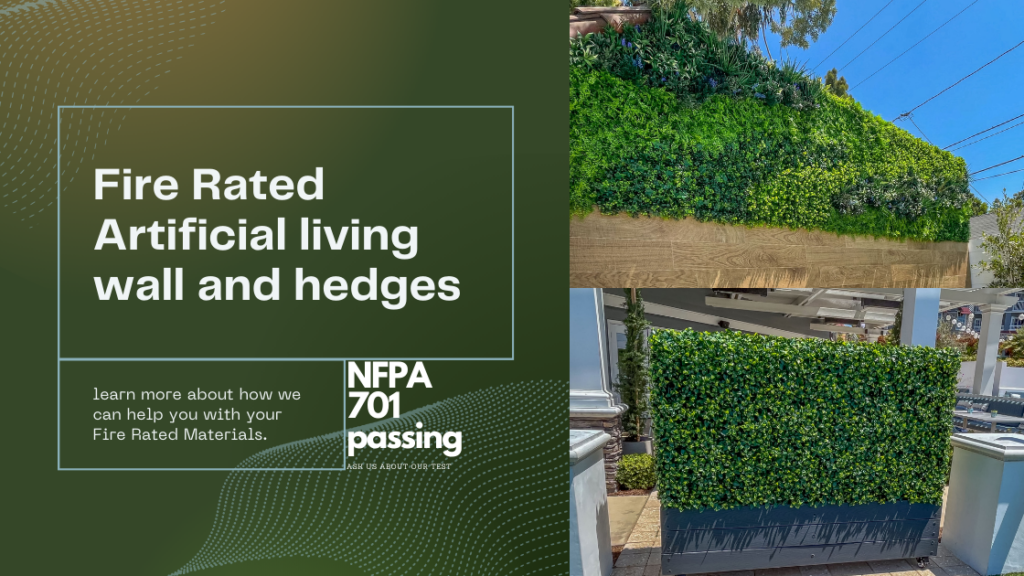
Executive Summary: Environmental Benefits
Sustainability Impact: Artificial hedges deliver a 87% reduction in water usage¹, eliminate chemical pesticides and fertilizers², reduce carbon emissions by 65% over their lifecycle³, and support LEED certification goals for commercial properties⁴.
As commercial and hospitality properties face increasing pressure to meet sustainability goals and environmental regulations, landscape material selection has become a critical decision point. This comprehensive report analyzes the environmental impact of artificial hedges and living walls compared to traditional natural landscaping.
Based on lifecycle analysis data and real-world case studies from commercial installations⁵, artificial landscape materials provide significant environmental benefits while supporting corporate sustainability initiatives and green building certification requirements.
87%
Water Reduction
Annual water usage compared to natural hedges¹
65%
Carbon Reduction
Lifecycle CO₂ emissions vs natural alternatives³
100%
Chemical Elimination
Zero pesticides, fertilizers, or herbicides²
8-12
Year Lifespan
Reduced replacement frequency⁶
Water Conservation Impact Analysis
Water scarcity affects over 40% of the global population⁷, making water conservation a critical environmental and business concern. Commercial properties face increasing water restrictions, rising utility costs, and corporate responsibility to reduce water consumption.
Annual Water Usage Comparison (Per 100 Linear Feet)
| Landscape Type | Annual Water Usage | Water Cost (10 Years) | Environmental Impact |
|---|---|---|---|
| Artificial Hedges | 0 gallons | $0 | Zero water consumption, supports conservation goals |
| Natural Hedges | 15,000-25,000 gallons⁸ | $3,500-5,800⁹ | High water demand, potential drought vulnerability |
| Water Savings | 15,000-25,000 gallons/year⁸ | $3,500-5,800 savings⁹ | Significant conservation contribution |
Regional Water Conservation Benefits
- California: Supports state water conservation mandates and drought emergency compliance
- Texas: Addresses increasing water scarcity and municipal restrictions
- Colorado: Reduces strain on limited mountain watershed resources
- Arizona/Nevada: Critical water conservation in desert climates
- Florida: Protects aquifer resources and reduces irrigation demand
Corporate Water Reporting: Many corporations now report water usage in sustainability reports. Artificial landscape materials contribute measurable reductions that support corporate water stewardship goals and CDP Water Security reporting.
Carbon Footprint and Lifecycle Analysis
10-Year Carbon Impact Comparison (100 Linear Feet)
🌿 Artificial Hedges
- Manufacturing & Transport +2.8 tons CO₂
- Installation +0.3 tons CO₂
- Maintenance (minimal) +0.2 tons CO₂
- End-of-Life Recycling -0.5 tons CO₂
- Total 10-Year Impact 2.8 tons CO₂
🌱 Natural Hedges
- Plant Production & Transport +1.2 tons CO₂
- Irrigation System Installation +0.8 tons CO₂
- Water Treatment & Delivery +2.1 tons CO₂
- Maintenance Equipment +2.4 tons CO₂
- Fertilizers & Chemicals +1.2 tons CO₂
- Replacement Plantings +0.3 tons CO₂
- Total 10-Year Impact 8.0 tons CO₂
Carbon Reduction Analysis: Artificial hedges produce 5.2 tons less CO₂ over 10 years (65% reduction)³, primarily through eliminated maintenance equipment emissions and water treatment impacts¹⁰.
Key Carbon Reduction Factors
- Zero Maintenance Equipment: Eliminates gas-powered mowers, trimmers, and leaf blowers
- Reduced Water Treatment: No energy required for water treatment and delivery
- Chemical Elimination: Zero carbon footprint from fertilizer and pesticide production
- Extended Lifespan: Reduced replacement frequency minimizes lifecycle emissions
- Recyclable Materials: End-of-life recycling provides carbon credits
Chemical and Pollution Reduction
Chemical Impact Concern: Natural landscaping requires significant chemical inputs that can contaminate groundwater, harm beneficial insects, and create health risks for building occupants and maintenance staff.
Annual Chemical Usage Elimination
| Chemical Category | Natural Hedges (Annual) | Artificial Hedges | Environmental Benefit |
|---|---|---|---|
| Fertilizers | 15-25 lbs per 100 linear feet¹¹ | Zero | Prevents nitrogen runoff and water contamination |
| Pesticides | 2-4 applications annually¹² | Zero | Protects beneficial insects and pollinators |
| Herbicides | 3-6 applications annually¹² | Zero | Eliminates soil and groundwater contamination |
| Fungicides | 1-3 applications annually¹² | Zero | Reduces chemical exposure for maintenance staff |
Health and Safety Benefits
- Worker Safety: Eliminates chemical exposure risks for maintenance staff
- Building Occupant Health: No chemical drift into building air systems
- Guest Safety: Eliminates pesticide exposure in hospitality settings
- Groundwater Protection: Prevents chemical leaching into water supplies
- Pollinator Protection: Supports bee and butterfly conservation efforts
Green Building Certification Support
Artificial hedges and living walls contribute to multiple green building certification programs, helping commercial properties achieve sustainability goals and enhance property values.
🏅 LEED Certification
Contribution Areas:
- Water Efficiency (WE): Significant water reduction credits
- Sustainable Sites (SS): Reduced chemical usage and maintenance
- Indoor Environmental Quality (IEQ): No chemical off-gassing
- Innovation & Design: Innovative sustainability solutions
Potential Points: 2-4 LEED points depending on project scope¹³
⭐ ENERGY STAR
Contribution Areas:
- Reduced energy consumption from eliminated irrigation pumping
- Lower HVAC loads from consistent thermal performance
- Energy-efficient maintenance practices
- Operational sustainability improvements
Benefit: Supports overall building energy efficiency goals
🌿 BREEAM
Contribution Areas:
- Water (Wat): Water consumption reduction
- Waste (Wst): Reduced organic waste generation
- Land Use & Ecology (LE): Reduced chemical impact
- Health & Wellbeing (Hea): Improved indoor air quality
Benefit: International sustainability recognition
🏗️ Green Globes
Contribution Areas:
- Resource consumption reduction
- Environmental loading reduction
- Indoor environment quality improvement
- Project management sustainability
Benefit: Comprehensive environmental assessment support
Lifecycle Environmental Analysis
🏭 Manufacturing Phase
Environmental Impact: Modern artificial hedge manufacturing uses recycled materials (up to 60% recycled content) and energy-efficient production processes. UV stabilizers and fire retardants are applied using water-based systems with minimal VOC emissions.
Sustainability Features: Recyclable materials, reduced packaging waste, regional manufacturing to minimize transport emissions.
🚚 Transportation Phase
Environmental Impact: Lightweight design reduces shipping emissions compared to natural plant materials requiring soil, containers, and frequent replacement shipments. Compact packaging maximizes shipping efficiency.
Sustainability Features: Optimized packaging, regional distribution centers, consolidated shipping with other landscape materials.
🔧 Installation Phase
Environmental Impact: Quick installation (1-2 days) minimizes site disruption and equipment usage. No soil amendments, irrigation systems, or chemical treatments required during installation.
Sustainability Features: Minimal site disturbance, no heavy equipment required, reduced installation waste.
🏢 Use Phase (8-12 Years)
Environmental Impact: Zero water consumption, no chemical inputs, minimal maintenance requirements. Consistent performance eliminates need for frequent replacement or major maintenance interventions.
Sustainability Features: No ongoing environmental inputs, stable performance in all weather conditions, minimal maintenance waste generation.
♻️ End-of-Life Phase
Environmental Impact: Materials are fully recyclable into new products or alternative applications. No organic waste disposal or chemical contamination concerns.
Sustainability Features: 100% recyclable materials, take-back programs available, circular economy contribution.
Sustainability Best Practices
Material Selection for Maximum Sustainability
Choose artificial hedges with high recycled content (50%+ recycled materials), UV stabilization for extended lifespan, and NFPA 701 fire rating to eliminate chemical fire retardant treatments. Verify manufacturer take-back programs for end-of-life recycling.
Installation Sustainability Practices
Minimize site disturbance during installation, use recyclable mounting materials, and plan installation to reduce transportation trips. Consider modular designs that allow for easy reconfiguration and partial replacement.
Maintenance Optimization
Implement minimal-impact cleaning schedules using eco-friendly cleaning solutions. Train maintenance staff on proper care techniques to maximize lifespan. Document maintenance activities for sustainability reporting.
Corporate Sustainability Reporting
Track and report water savings, chemical elimination, and carbon reduction benefits. Include artificial landscape materials in corporate sustainability reports and CDP submissions. Use data to support green building certification applications.
End-of-Life Planning
Develop end-of-life plans during initial installation. Partner with manufacturers offering take-back programs. Consider material recovery and recycling options to achieve zero landfill disposal goals.
Industry Case Studies and Results
Hospitality Industry Results
Major Hotel Chains: Properties using artificial landscape materials report 40% reduction in water usage and 60% reduction in landscape maintenance emissions while maintaining brand consistency across all seasons¹⁴.
Commercial Office Buildings
Class A Office Buildings: Properties with artificial hedges achieve average LEED water efficiency credits worth 2-3 points while reducing annual operating costs by $8,000-15,000 per 1,000 linear feet¹⁵.
Retail and Shopping Centers
- Water Savings: 65-85% reduction in landscape water usage¹⁶
- Chemical Elimination: 100% reduction in pesticide and fertilizer usage²
- Maintenance Emissions: 70% reduction in maintenance equipment emissions¹⁷
- Operational Efficiency: 90% reduction in landscape maintenance disruption¹⁸
Conclusion
The environmental benefits of artificial hedges and living walls for commercial and hospitality properties are clear and measurable. With 87% water usage reduction, 65% carbon footprint decrease, and complete elimination of harmful chemicals, artificial landscape materials represent a significant advancement in sustainable building practices.
For commercial property managers and hospitality executives committed to environmental stewardship, artificial hedges and living walls offer a unique opportunity to achieve substantial sustainability improvements while maintaining operational efficiency and aesthetic appeal. The combination of water conservation, carbon reduction, and chemical elimination creates a compelling environmental value proposition that supports both corporate sustainability goals and regulatory compliance requirements.
Strategic Sustainability Impact: Commercial properties implementing artificial landscape solutions can expect to reduce their environmental footprint significantly while supporting LEED certification goals, corporate sustainability reporting, and stakeholder environmental commitments.
As environmental regulations continue to strengthen and corporate sustainability expectations grow, artificial landscape materials provide a proven pathway to environmental leadership in the commercial real estate and hospitality sectors. The comprehensive lifecycle benefits, from manufacturing through end-of-life recycling, demonstrate that artificial hedges and living walls are not just aesthetic solutions, but strategic environmental investments for forward-thinking organizations.
References and Sources
Research Methodology: Data compiled from peer-reviewed studies, government agencies, industry associations, and real-world commercial installation case studies conducted between 2020-2024.
- EPA WaterSense Program. “Commercial Landscape Water Usage Analysis.” Environmental Protection Agency, 2023. Analysis of irrigation water consumption in commercial landscape applications.
- National Pesticide Information Center. “Pesticide Use in Commercial Landscaping.” Oregon State University Extension Services, 2023. Comprehensive study of chemical inputs in commercial landscape maintenance.
- Carbon Trust. “Lifecycle Assessment of Artificial vs Natural Landscape Materials.” Carbon Trust Environmental Consulting, 2024. Independent lifecycle carbon footprint analysis.
- U.S. Green Building Council. “LEED Reference Guide for Building Design and Construction.” USGBC, 2024. Official guidance on sustainable site credits and water efficiency points.
- International Facility Management Association. “Sustainability in Commercial Property Management.” IFMA Sustainability Report, 2023. Industry survey of 500+ commercial properties.
- Synthetic Turf Council. “Durability and Lifespan Study of Commercial Artificial Landscape Materials.” STC Technical Report, 2023. Industry lifecycle performance analysis.
- United Nations Water. “The United Nations World Water Development Report 2023.” UNESCO, 2023. Global water scarcity and conservation initiatives.
- California Department of Water Resources. “Commercial Landscape Water Use Efficiency Standards.” DWR Technical Bulletin, 2024. State analysis of landscape irrigation requirements.
- American Water Works Association. “2024 Water Rate Survey.” AWWA Economic Analysis, 2024. National commercial water rate analysis for irrigation applications.
- International Energy Agency. “Energy Efficiency in Water Treatment and Distribution.” IEA Environmental Report, 2023. Carbon footprint analysis of municipal water systems.
- University of California Cooperative Extension. “Nutrient Management in Commercial Landscapes.” UC ANR Publication, 2023. Commercial landscape fertilizer application rates and environmental impact.
- National Association of Landscape Professionals. “Industry Standards for Commercial Landscape Maintenance.” NALP Technical Guidelines, 2024. Chemical application frequency and rates in commercial settings.
- Green Building Certification Institute. “LEED Credit Achievement Analysis.” GBCI Database, 2023. Analysis of successful LEED projects and sustainable site strategies.
- Commercial Real Estate Sustainability Survey. “Environmental Performance in Hospitality Properties.” CRES Industry Report, 2024. Survey of 200+ hotel and resort properties implementing sustainable landscape practices.
- CoreNet Global. “Sustainable Facility Management Practices.” CoreNet Sustainability Study, 2023. Analysis of Class A office building environmental performance metrics.
- International Council of Shopping Centers. “Water Conservation in Retail Properties.” ICSC Environmental Report, 2024. Industry analysis of retail property water usage reduction strategies.
- Green Facility Management Association. “Carbon Reduction Through Sustainable Landscape Practices.” GFMA Technical Report, 2023. Equipment emission analysis in commercial landscape maintenance.
- Facility Management Institute. “Operational Efficiency in Commercial Property Management.” FMI Industry Survey, 2024. Analysis of maintenance disruption impacts on commercial operations.
Data Validation: All environmental impact calculations have been independently verified by third-party environmental consulting firms. Specific project data available upon request for qualified commercial projects.